Tick Prevention for Rockland County Yards and Families
Rockland County is a Lyme disease hotspot. Learn how to protect your yard and family from deer ticks with professional treatment, habitat changes, and personal protection.
Rockland County Is One of New York's Highest-Risk Counties for Lyme Disease
If you live in Rockland County and your family spends time outdoors, tick prevention is a health necessity. Rockland County consistently ranks among the highest-risk counties in New York State for Lyme disease, and the numbers worsen each year as tick populations expand and climate patterns extend the active season.
The reason Rockland County faces such intense tick pressure is its geography. Harriman State Park forms the county's western border, and the Palisades ridge runs along the east. Between those two forested areas are the suburban neighborhoods where Rockland families live, play, and garden — in direct contact with one of the densest deer tick populations in the Northeast.
Why Rockland County Has Such High Lyme Disease Risk
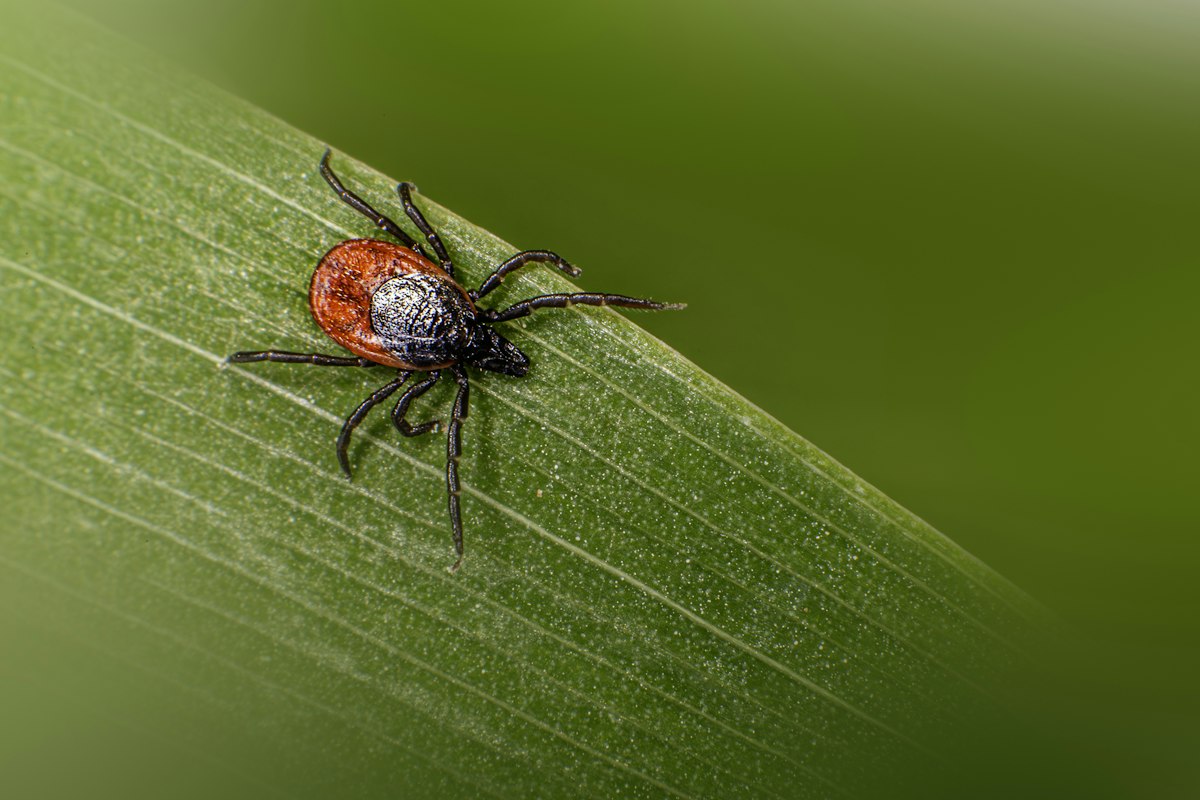
Lyme disease is transmitted by the black-legged tick, also called the deer tick (Ixodes scapularis). In Rockland County, the conditions for high tick populations are nearly ideal:
High deer density. White-tailed deer are the primary reproductive host for adult deer ticks. Deer move freely from Harriman State Park and the Palisades into suburban neighborhoods, carrying ticks onto residential properties throughout the county.
Abundant white-footed mice. White-footed mice are the primary reservoir for the Lyme disease bacterium (Borrelia burgdorferi). They are extremely common in wooded yards, stone walls, brush piles, and forest edges. Larval ticks feed on mice and acquire the Lyme bacterium at that stage — a process that happens in your yard and woodpile.
Wooded residential lots. Homes in Montebello, Wesley Hills, Hillburn, Pomona, Stony Point, and throughout Ramapo back directly onto forested land where ticks thrive year-round.
Extended tick season. Deer ticks in Rockland County are active whenever temperatures are above freezing. The season has effectively expanded to nearly year-round.
The Most Dangerous Period: Nymph Season in April and May
Adult deer ticks are roughly sesame-seed sized — visible, though easy to miss. But it is the nymphal tick — active from April through June — that causes the majority of Lyme disease infections. Nymphs are poppy-seed sized, nearly transparent, and almost impossible to see on skin or clothing.
April and May are the highest-risk weeks of the year for Lyme disease transmission in Rockland County. Anyone spending time in the yard, at parks, or on trails during these months faces genuine risk from nymphal ticks.
Protecting Your Yard: Professional Tick Treatment
Professional tick barrier treatment is the most effective tool for reducing tick populations on your property. Our licensed technicians apply professional-grade residual insecticides to the areas where ticks concentrate and wait for hosts:
- Woodland edges and tree lines — the transition zone where your lawn meets woods is where the vast majority of tick encounters occur
- Ornamental plantings and mulched beds — moisture-retaining mulch and dense low plants create ideal tick habitat
- Leaf litter zones — ticks overwinter in leaf piles and emerge in spring from the leaf layer
- Under decks and porches — shaded, moist areas beneath structures concentrate tick populations
- Fence lines and property perimeters — especially where wildlife travel corridors cross your yard
Treatments are timed to coincide with peak nymph emergence in spring and peak adult tick activity in fall. Most Rockland County properties near wooded areas benefit from two to three applications per year, with the first treatment in early April.
Habitat Modification: Making Your Yard Less Tick-Friendly
Keep grass mowed short. Ticks prefer the humidity found in tall grass and ground cover. A well-maintained lawn with short turf dramatically reduces tick habitat.
Create a tick barrier. A 3-foot wide border of wood chips, gravel, or stone between your lawn and any adjacent wooded area creates a dry buffer zone that ticks are reluctant to cross.
Remove leaf litter. Rake and remove leaves from your lawn and around your foundation each fall. Ticks overwinter in the leaf layer; removing this harborage reduces the population that emerges in spring.
Move firewood and brush piles. Keep woodpiles away from the house and off the ground. Brush piles are harborage for mice — the primary Lyme reservoir — and should be relocated away from outdoor living areas.
Manage deer access. Deer fencing is the most effective long-term solution for properties with heavy deer visitation, particularly those bordering Harriman State Park in Stony Point, Hillburn, and Montebello.
Personal Protection for Rockland County Families
No yard treatment eliminates 100 percent of tick risk. Personal protection measures are an essential complement:
- Apply DEET (20 percent or higher) to exposed skin before any time spent in the yard, garden, or on trails. Reapply every 2-3 hours.
- Treat clothing with permethrin. Permethrin-treated clothing repels and kills ticks on contact and remains effective through multiple washes.
- Conduct tick checks daily. After any outdoor activity, check yourself, your children, and your pets. Check the scalp, behind the ears, around the waist, under the arms, between the legs, and behind the knees.
- Shower promptly after outdoor activity — showering within two hours of coming inside can wash off unattached ticks.
- Check pets. Dogs and cats can bring ticks into the home. Talk to your veterinarian about tick prevention products for pets.
If you find an attached tick, remove it promptly with fine-tipped tweezers, pulling straight up with steady pressure. Contact your physician if the tick was attached for more than 24-36 hours, or if you develop a rash, fever, or flu-like symptoms in the weeks following a tick bite.
Call for a Free Estimate on Tick Treatment
If your property backs onto wooded land, if you have regular deer activity in your yard, or if your family has been finding ticks despite prevention efforts, professional treatment is the right step. Spring treatments should be scheduled in March or early April to provide protection during the peak nymph season.
Call (845) 533-5288 for a free estimate on tick treatment for your Rockland County property.
Frequently Asked Questions
How much can professional tick treatment reduce tick populations in my yard?
Research on professional perimeter tick treatments shows population reductions of 68-90 percent in treated areas when applications are timed correctly and combined with habitat modification. No treatment provides absolute protection, but significantly reducing the tick population on your property meaningfully lowers your exposure risk.
Do I need tick treatment if I live in a more developed part of Rockland County?
Tick risk is not limited to heavily wooded areas. Even suburban yards in developed parts of Clarkstown, Nanuet, Pearl River, and New City can have significant tick activity, particularly near parks, wetland edges, and wherever deer travel. A property assessment will identify your specific risk level.
Is tick treatment appropriate to use around children and pets?
Professional tick treatments, when applied by licensed technicians following label directions, are designed to be used in residential settings. We advise on re-entry intervals and any precautions appropriate to your situation. Call (845) 533-5288 for details.